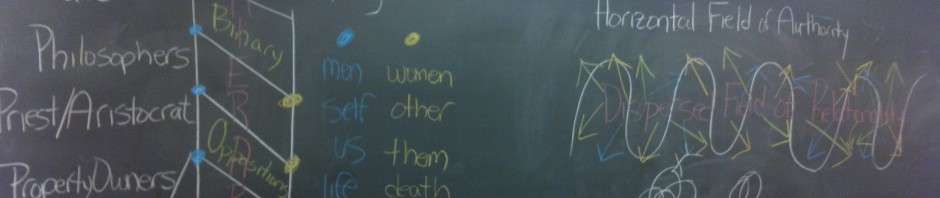
In addition to face-to-face teaching, I regularly create video lectures that are used as part of the first-year writing curriculum at Xavier University. Beyond creating reusable works for the classroom, I also create video-based scholarship. Below is a sample of these works. As part of my online teaching, I have created a library of video lectures and tutorials. These videos are now used in Miami University’s Composition Program courses, in both online and face-to-face contexts, and are included in the Teacher’s Guide, an annual publication designed to aid instructors teaching composition at Miami. In addition, I have used the medium of video to compose and distribute scholarship within the discipline of Composition and Rhetoric, including the video below (Emma’s Notebook) that presents research conducted on women’s 19th century writing, one of my central areas of focus.
Video Scholarship
“Existential Wordplay: Humans, Creativity, and AI Writing Games” is a video/game of writing between humans and AI where presenters both discuss and show different uses of AI writing, experimenting with human and AI responses to existential questions, inviting participants to play the Existential Writing Game. (Originally created for the Marquette Writing Innovation Symosium 2024)
“Emma’s Notebook” is the story of my journey to recover the life of Emma Cecelia Stadtmiller, whose notebook from 1888 I found in my grandmother’s attic.
“19th Century Women: Private and Public Spheres” offers an overview of the ways that public sphere theories might be used to understand the movement of 19th century American women from the private sphere of domesticity and family into more public roles within society.
Sample Video Lectures
“Free Speech Rhetoric & Democracy” gives a short overview of the historic roots of free speech, rhetoric, and democracy, showing how they all arose contemporaneously in 4th and 5th century BCE Athens. This video also describes the types of free speech, especially parrhesia — the act of speaking out in risky situations, both historically and in our present day.
“Introduction to Rhetoric: History, Use, and Practice” This video offers an introduction to the history of rhetoric, the major appeals, and how these concepts can be applied to texts in order to understand how they work rhetorically. These appeals working in conjunction with one another are how texts become “persuasive” to their audiences, but because different people may be moved by different appeals, not every text is equally persuasive to all audiences. This video introduction will explain where rhetoric comes from, offer terms to describe how it works, and then demonstrate these concepts in action on various texts.
 Renea Frey